Public Transportation in Japan
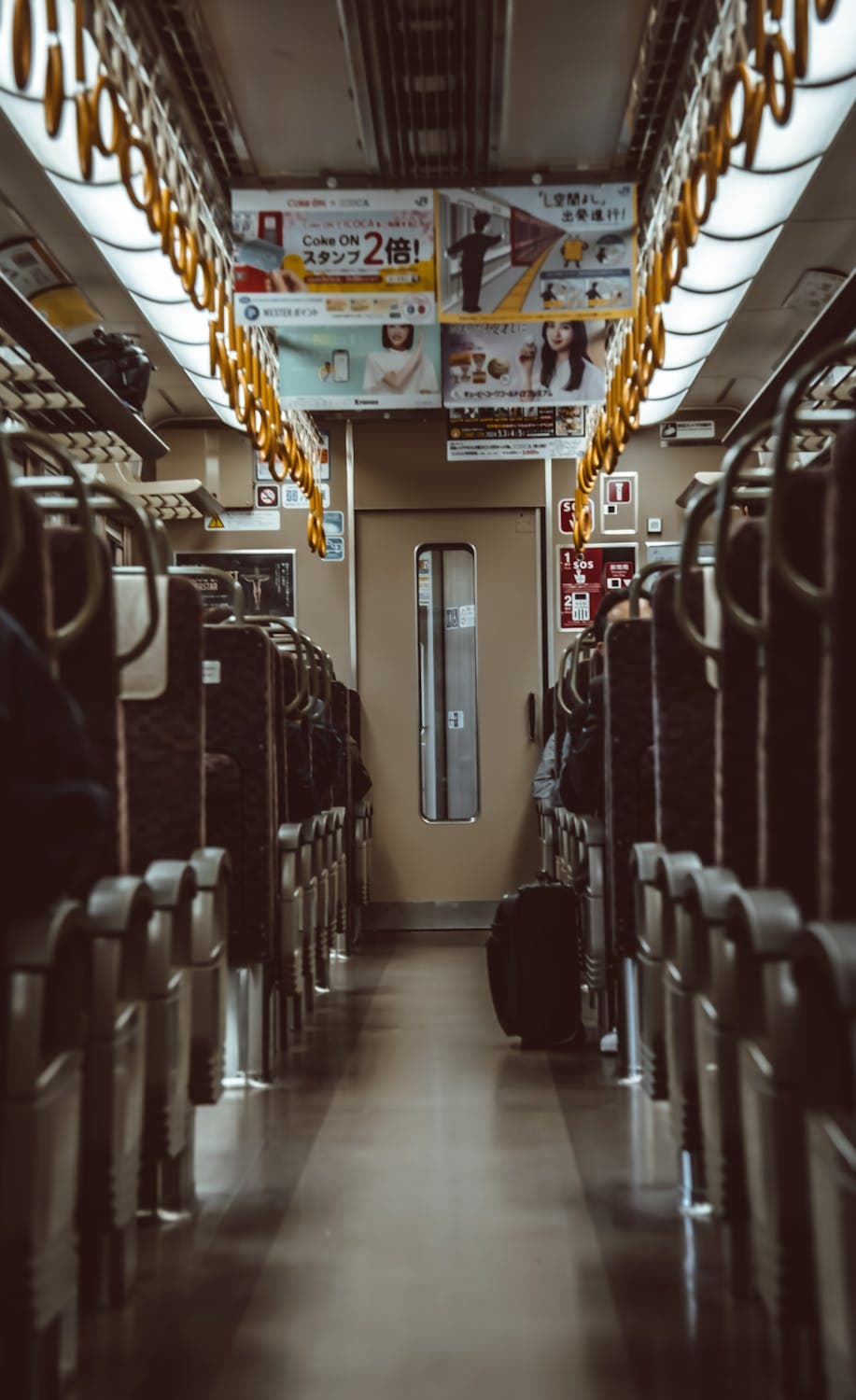 Inside a Japanese train
Japan's public transportation system moves approximately 40 million passengers daily in the Tokyo metropolitan area alone. The network's reputation for punctuality is well-earned—the average delay for shinkansen (bullet trains) in 2022 was 54 seconds, and delays of more than 5 minutes trigger formal apologies and delay certificates for employers.
The IC Card System
Prepaid IC (integrated circuit) cards have largely replaced paper tickets for everyday travel. The two major cards in the Tokyo area are:
- Suica (JR East) - Named from a play on "super urban intelligent card" and the Japanese word for watermelon
- Pasmo (Private railways and Tokyo Metro)
Both cards are interchangeable throughout Japan—a Suica works on Osaka's subways, and a Pasmo works on JR lines. The ¥500 deposit is refundable when you return the card, minus a ¥220 processing fee for Suica.
Beyond transportation, IC cards function as electronic money at convenience stores, vending machines, coin lockers, and many restaurants. The tap-and-go system eliminates the need to calculate fares or handle cash.
Digital versions (Mobile Suica, Mobile Pasmo) integrate with Apple Wallet and Google Pay, allowing visitors to add a card directly to their phone without visiting a ticket machine.
Understanding the Train Network
Tokyo's rail system consists of multiple operators that interconnect at major stations:
- JR East - The former national railway, operating the Yamanote loop line and suburban routes
- Tokyo Metro - Nine subway lines, color-coded (Ginza Line is orange, Marunouchi is red)
- Toei Subway - Four additional subway lines operated by the Tokyo Metropolitan Government
- Private Railways - Companies like Tokyu, Odakyu, and Keio connecting central Tokyo to suburbs
The complexity stems from historical development rather than poor planning. Each company built lines to serve different areas, and the current network reflects over a century of organic growth.
For navigation, stations are identified by line color, letter code, and number. Shibuya Station on the Ginza Line is "G01"; on the Hanzomon Line, it's "Z01." This system, introduced in 2004, makes the network navigable without reading Japanese.
Train Etiquette
Japanese trains operate under implicit social rules that visitors should understand:
Silence is expected. Phone conversations are avoided entirely on trains—not just frowned upon, but essentially never done. Phones should be set to silent mode (called "manner mode" in Japanese). Quiet conversation is acceptable but kept to low volumes.
Queuing is systematic. Platforms have marked lines indicating where doors will open and where to queue. Passengers wait in orderly lines and allow exiting passengers to disembark before boarding.
Priority seats exist. Marked in a different color (usually blue or silver), these seats near car ends are designated for elderly passengers, pregnant women, people with disabilities, and those with small children. Nearby signage requests that phones be turned off entirely (not just silenced) in these areas, as pacemakers were historically believed to be affected by phone signals.
Backpacks go forward. On crowded trains, passengers wearing backpacks remove them and hold them in front or place them between their feet to avoid hitting others.
Eating is context-dependent. Strong-smelling food is avoided on all trains. On local commuter trains, eating is generally discouraged. On long-distance trains like shinkansen, eating boxed lunches (ekiben) is expected and part of the travel experience.
The Shinkansen
The bullet train network connects major cities at speeds up to 320 km/h. The Tokaido Shinkansen between Tokyo and Osaka (515 km) runs approximately every 10 minutes during peak hours, with the fastest service (Nozomi) completing the journey in 2 hours 21 minutes.
Three classes of service operate on most routes:
- Nozomi - Fastest, fewest stops
- Hikari - Moderate speed, more stops
- Kodama - Stops at every station
The Japan Rail Pass, available only to tourists on temporary visitor visas, covers unlimited travel on most JR lines including most shinkansen. However, it does not cover the fastest Nozomi and Mizuho services.
Shinkansen tickets include both a base fare and an express surcharge. Reserved seats cost slightly more than unreserved, but guarantee seating on busy routes. During peak travel periods (Golden Week, Obon, New Year), reserved seats sell out days in advance.