Okinawa: Japan's Subtropical Kingdom
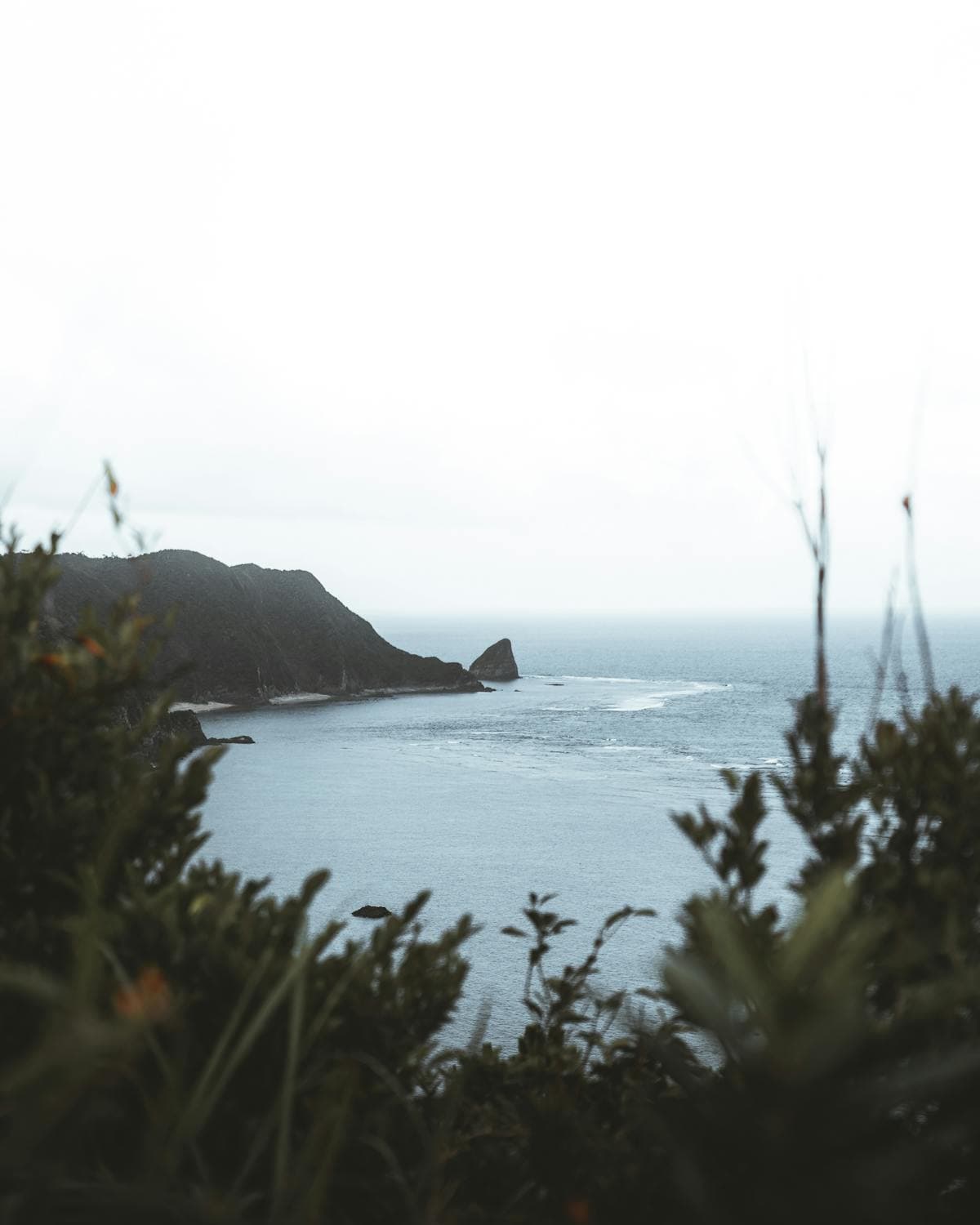 Okinawa Beach
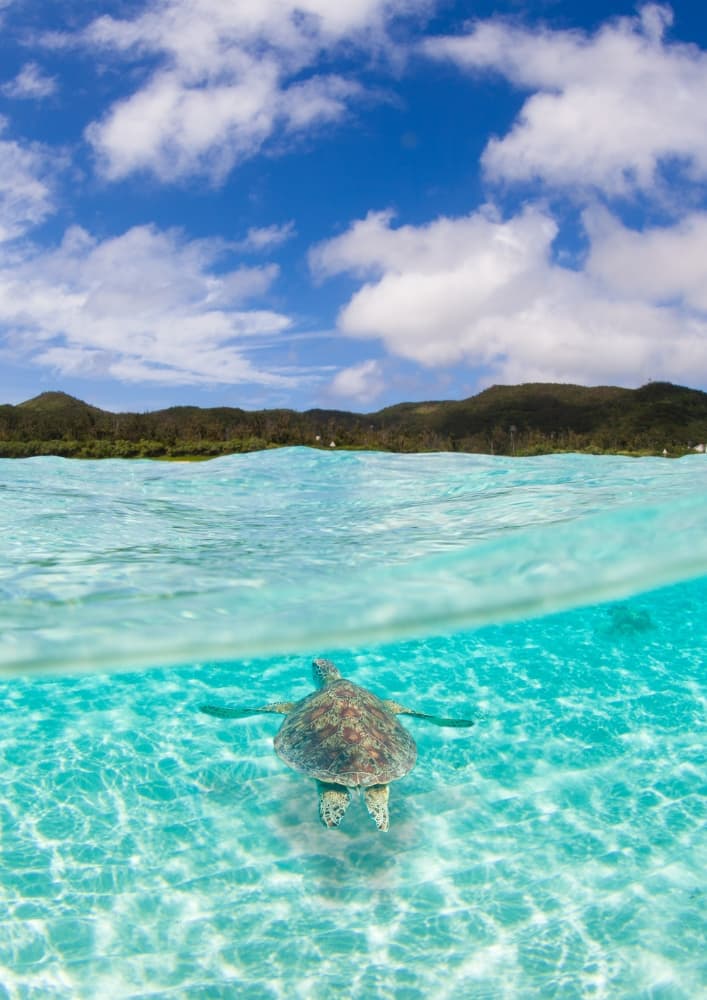
Okinawa Prefecture comprises 160 islands stretching southwest from Kyushu toward Taiwan, covering a latitude range roughly equivalent to Miami to the Bahamas. The main island of Okinawa, at 1,200 square kilometers, holds the majority of the prefecture's 1.4 million residents. The climate is subtropical—palm trees grow naturally, typhoons arrive regularly between May and October, and winter temperatures rarely drop below 15°C.
The Ryukyu Kingdom
For approximately 450 years, from its unification around 1429 until 1879, these islands formed the independent Ryukyu Kingdom. The kingdom maintained formal tributary relations with Ming and Qing China while also trading with Japan, Korea, and Southeast Asian nations. This position as a maritime trading hub created a culture that blended influences from multiple sources while developing distinctive local traditions.
Shuri Castle in Naha served as the royal residence and administrative center. The original complex, built in the Ryukyuan architectural style with red roof tiles and distinctive stone walls, was destroyed during the Battle of Okinawa in 1945, painstakingly reconstructed between 1992 and 2019, and then largely destroyed again by fire in October 2019. Reconstruction is currently ongoing with completion expected in 2026.
The kingdom was annexed by Japan in 1879 during the Meiji government's consolidation of territory. The last Ryukyuan king, Shō Tai, was compelled to relocate to Tokyo. Following annexation, Japanese language education replaced local languages in schools, and systematic cultural assimilation policies were implemented.
Language and Culture
The Ryukyuan languages—historically spoken across the island chain—are related to but distinct from Japanese, roughly as different as Portuguese is from Spanish. UNESCO classifies them as endangered; most fluent speakers are now elderly, and younger generations typically speak standard Japanese or Okinawan-influenced Japanese dialects.
Distinctive Okinawan cultural practices include:
- Sanshin: A three-stringed instrument covered with snakeskin, ancestor of the Japanese shamisen
- Awamori: A distilled spirit made from Thai-style long-grain rice, aged in clay pots, with production dating back at least 600 years
- Bingata: A resist-dyed textile technique producing vibrant patterns, historically reserved for royal and aristocratic clothing
- Eisa: A traditional dance performed during Obon festivals, featuring drums, chanting, and coordinated group movement
World War II and Its Aftermath
The Battle of Okinawa (April-June 1945) was the war's largest Pacific amphibious assault. Approximately 100,000 Japanese soldiers, 12,500 American soldiers, and an estimated 100,000-150,000 Okinawan civilians died—roughly one-quarter to one-third of the civilian population.
Following Japan's surrender, the United States administered Okinawa until 1972—27 years longer than the main islands. Even after reversion to Japan, significant U.S. military presence remains. The prefecture hosts approximately 70% of U.S. military facilities in Japan despite comprising only 0.6% of national territory. This concentration has generated ongoing political tension regarding base relocations and land use.
Contemporary Okinawa
Tourism now forms a major component of Okinawa's economy, with the prefecture attracting approximately 10 million visitors annually (pre-pandemic figures). The islands' coral reefs, beaches, and diving sites draw visitors seeking a tropical environment within Japan. The Churaumi Aquarium on the main island, featuring one of the world's largest tanks, is among Japan's most visited attractions.
Okinawa also holds distinction for longevity—the prefecture has historically had Japan's highest concentration of centenarians, though this distinction has diminished somewhat in recent decades as traditional diets have shifted toward mainland Japanese and Western patterns.