Osaka: The Merchant's City
 Osaka Castle
Osaka, Japan's third-largest city with 2.7 million residents (19 million in the greater metropolitan area), developed along fundamentally different lines than Kyoto or Tokyo. While those cities served as seats of political or imperial power, Osaka evolved as a commercial center—a distinction that continues to shape its character today.
The Nation's Kitchen
Osaka earned the nickname tenka no daidokoro ("the nation's kitchen"), though this term originally referred to economics rather than cuisine. During the Edo period, Osaka functioned as Japan's primary rice market. Feudal lords throughout the country shipped rice—the basis of tax payments and samurai stipends—to Osaka for sale and distribution.
The Dojima Rice Exchange, established in 1697, became the world's first organized futures market. Rice brokers developed sophisticated financial instruments, evolved into moneychangers, and eventually functioned as proto-bankers for the Tokugawa regime. This commercial tradition created a merchant class with significant economic power and a cultural attitude distinct from the warrior-dominated society of Edo.
The culinary meaning of "kitchen" developed later. Osaka's position as a trading hub gave it access to ingredients from across Japan, and its merchant population—unlike samurai bound by codes of frugality—could spend freely on food and entertainment.
Distinctive Food Culture
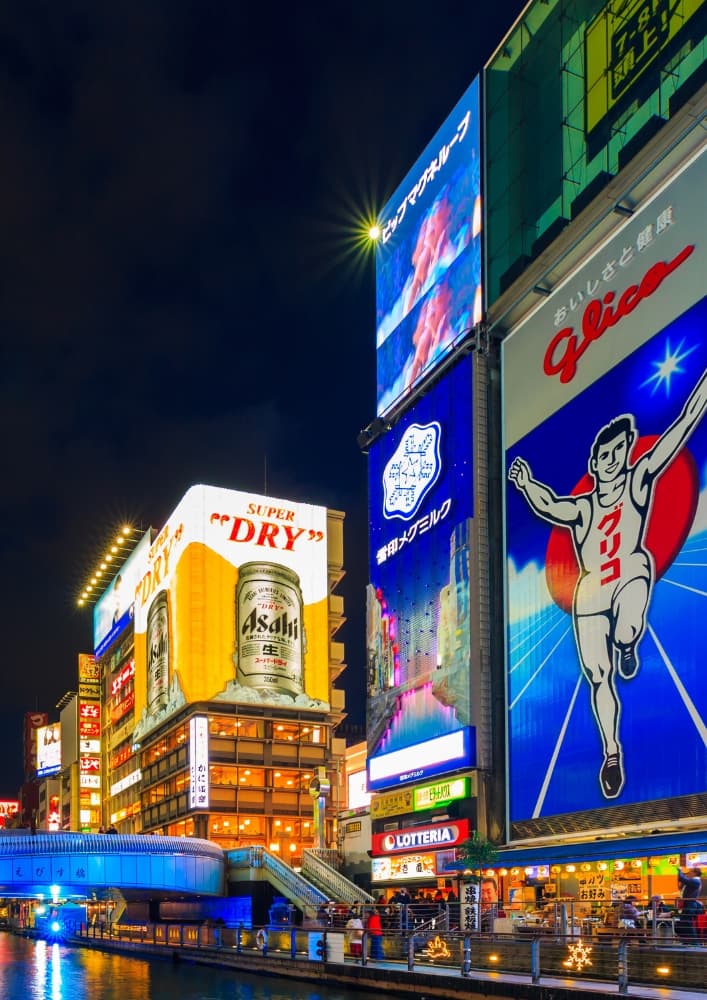
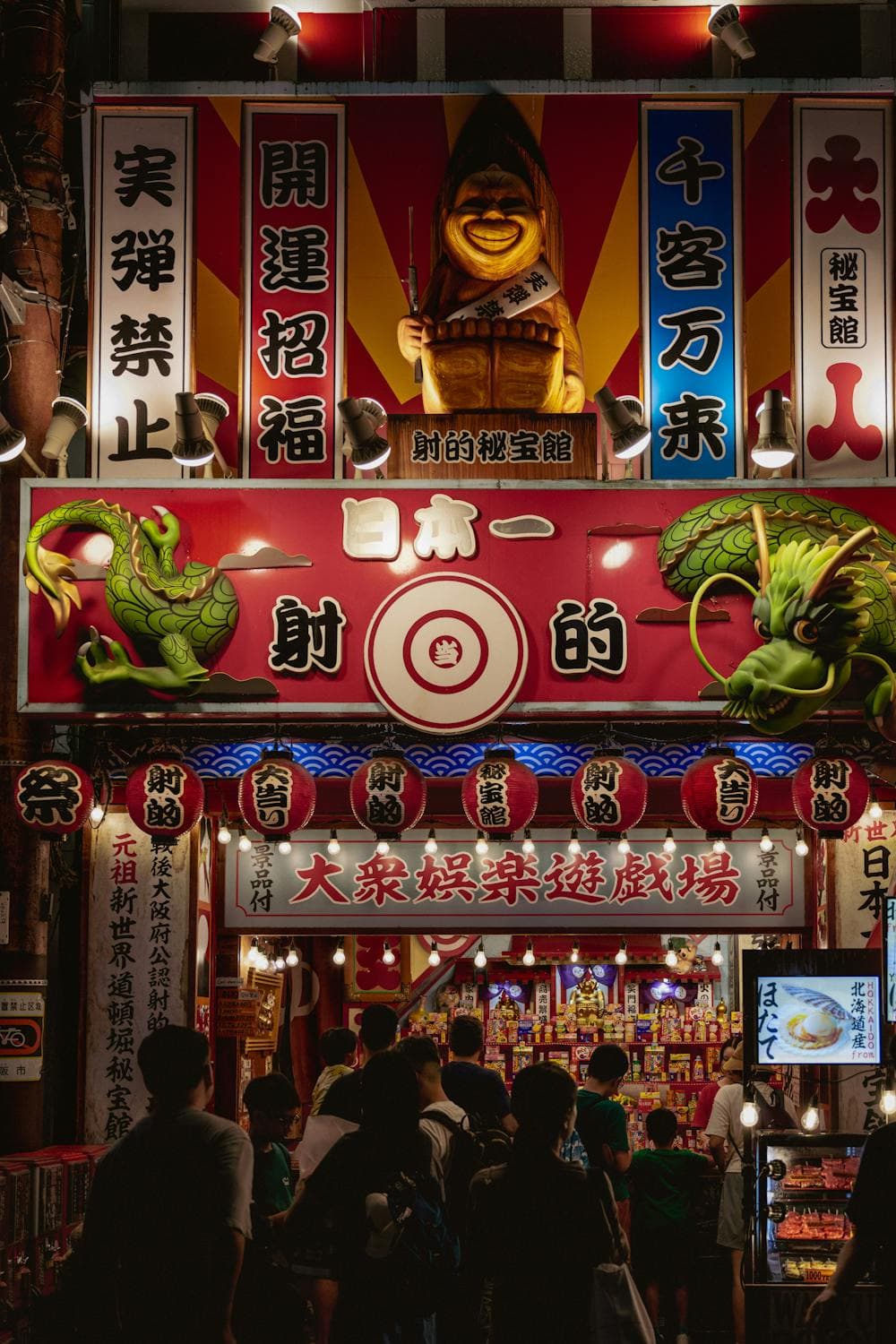 Dotonbori at Night
Modern Osaka is associated with several iconic dishes. Takoyaki (octopus balls) originated here in 1935, invented by street vendor Tomekichi Endo. The dish uses a distinctive molded pan to create spherical dumplings with diced octopus inside. Osaka-style okonomiyaki differs from the Hiroshima version—ingredients are mixed into the batter rather than layered.
The local expression kuidaore ("eat until you drop") captures the city's relationship with food. Unlike Tokyo, where dining often carries connotations of status and restraint, Osaka's food culture emphasizes abundance, value, and straightforward enjoyment.
Osaka Castle and Historical Sites
Osaka Castle, originally built by Toyotomi Hideyoshi in 1583, represented the height of castle architecture at the time. Hideyoshi—who unified Japan after decades of civil war—made Osaka his power base, and the castle's construction employed an estimated 100,000 workers.
The original structure was destroyed in 1615 during the siege that ended the Toyotomi line. The current tower dates to 1931, reconstructed in reinforced concrete, and functions primarily as a museum. The surrounding park remains one of the city's primary green spaces.
Character and Communication
Osaka residents speak a distinct dialect (Osaka-ben) that differs notably from standard Japanese. The dialect uses different verb endings, intonation patterns, and vocabulary—including akan for "no good" and nandeyanen as an expression of exasperated disbelief, often used as a comedic punchline.
This linguistic distinctiveness connects to Osaka's historical role in Japanese comedy. Manzai (stand-up comedy performed by pairs) developed here, and major entertainment companies including Yoshimoto Kogyo—which manages most of Japan's comedians—remain headquartered in Osaka. The city's reputation for humor and directness contrasts with Tokyo's perceived reserve.
Modern Economy
Contemporary Osaka serves as the economic center of the Kansai region. The city hosts Panasonic, Sharp, and Keyence, along with major pharmaceutical and chemical companies. Kansai International Airport, built on an artificial island in Osaka Bay and opened in 1994, handles both domestic and international traffic. Universal Studios Japan, which opened in 2001, draws approximately 15 million visitors annually.